Art Techniques in Photorealism
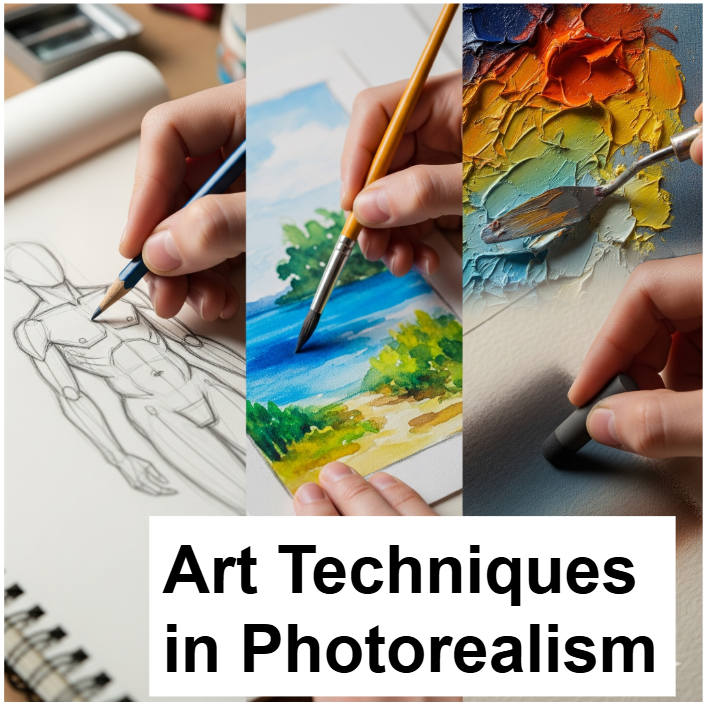
Not many people can appreciate the concept of realism art with digital applications and for good reasons.
Firstly, there is little work in this area and very few artists even the well known ones are not as engaged in it as much as traditional realism artworks. You can even ask chatgpt this question and find a similar response.
I have experience in both traditional and digital drawing and painting, so I can speak on this subject with some knowledge. I have outlined my findings why there is more realism or photorealistic artworks in traditional mediums but not so much in digital.
- Traditional mediums
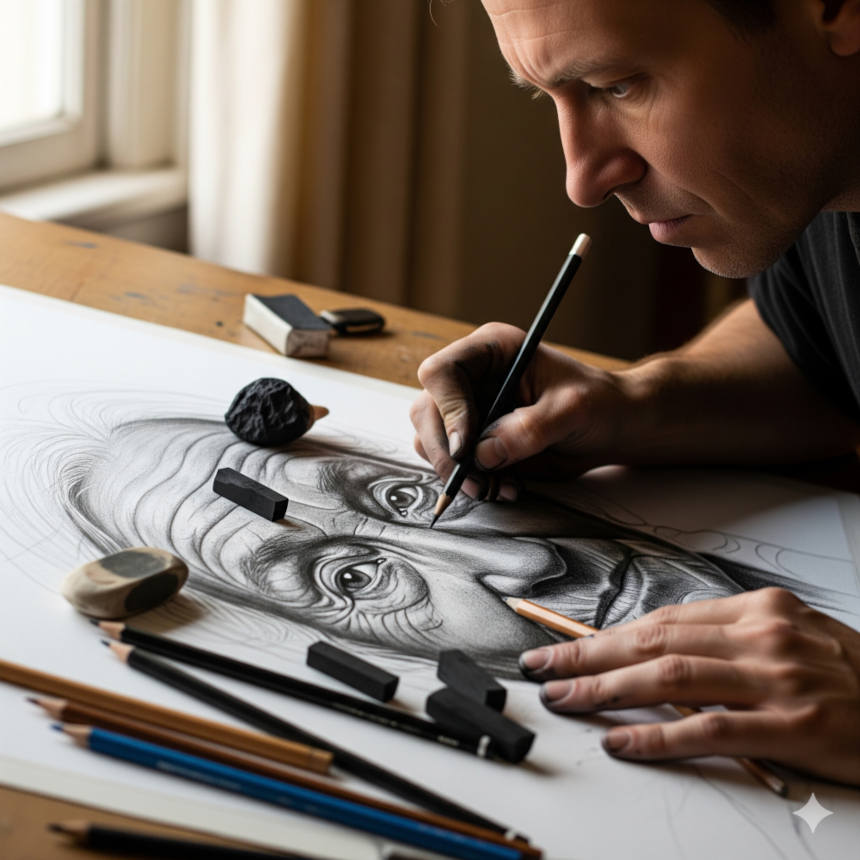
No one can argue that many artists have developed photorealistic and realism paintings over the last centuries. The traditional mediums have been around for many years and artists have been able to craft their techniques to produce realistic paintings. To produce these artworks requires an intimate knowledge and understanding of the materials being used and developing the necessary art techniques. It is perhaps the reason why many artists like Marcello Barenghi use a range of mixed media to produce his realistic drawings. His skills with the different traditional mediums are exceptional since it requires one to produce the perfect tones, textures, colors etc. to render a photorealistic painting.
Since many people from an early age have access to traditional mediums, they can gain the confidence to improve their drawing techniques. You may have seen many realistic portraits of famous celebrities drawn with just pencils. You can find some on facebook and the work is truly impressive especially when you come to know that it was made with one or two pencils. This only shows the power and degree of control that the artist has over the pencil. This comes from practice and an intimate knowledge of how the pencil interacts with the paper.
- Digital mediums
Most of us have dabbled in digital drawing applications since there is an abundance of them on the google and apple play stores for our phones and tablets. Maybe it tweaked your interest because you were always interested in drawing at a young age. For those who begin this journey of digital painting and drawing can find that they can do a lot with the drawing applications. For example, they may have found blending rather awkward in the traditional medium and now they have an auto blending tool. Their drawing strokes were awkward and jagged and the auto corrections smooths it out. As for shapes, they can draw a perfect circle and there is no reason to practice trying to make a perfect circle. As for coloring objects, that’s dead easy, they just select the shape and press a button and voila, it's perfectly filled! The important point is that these tools did away with all the art techniques that had to be learnt by hand in traditional mediums.
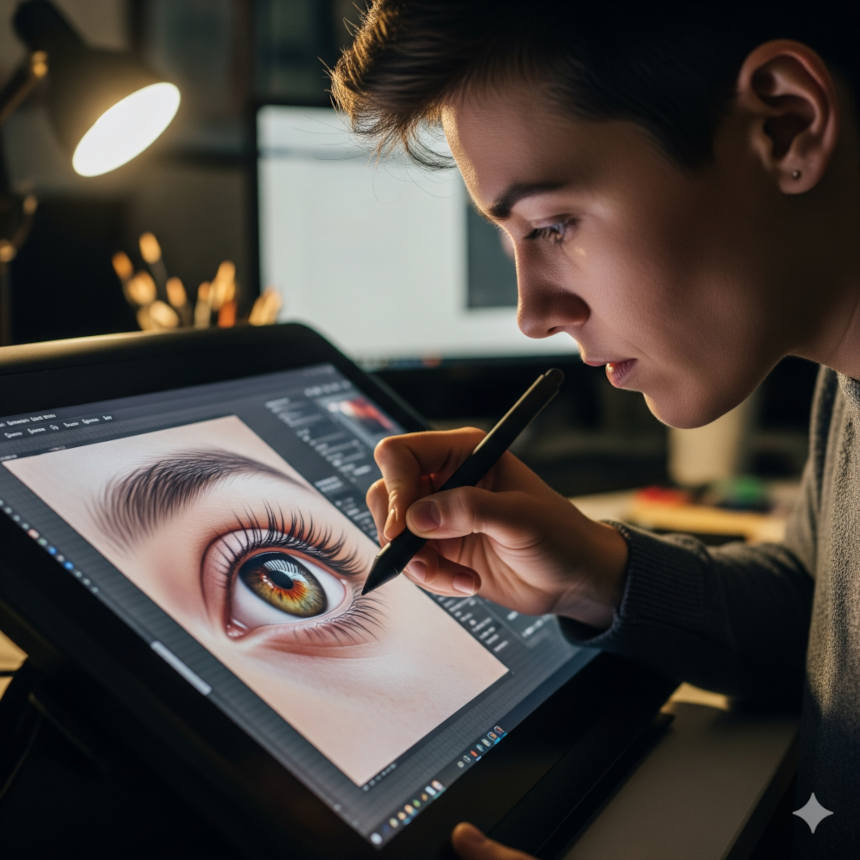
One would think that these tools designed to bypass the laborious traditional techniques should now pave the way for a large body of realistic digital artworks.
Unfortunately no, as I shall explain.
Let’s look at this dependency on the digital tools that is the main culprit why many don’t pursue realistic or photo realism in the digital domain. It is something you would not fully understand unless you have delved into digital drawing and painting as much as I have.
The natural thinking is that with so many available digital tools at our disposal, it should be relatively easy to create realistic drawings. Yes, maybe with AI software but not by a human. I often use the analogy of the carpenter to provide more insight to this incorrect way of thinking.
- The Two carpenters analogy
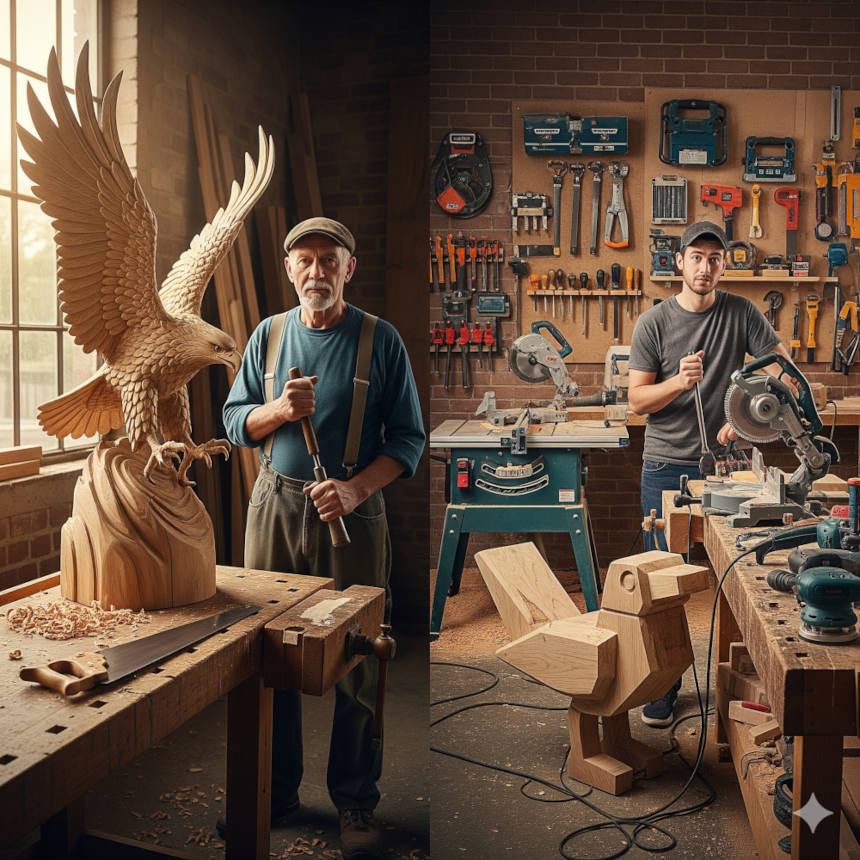
Suppose you wanted a piece of furniture made to high standards and you approached two carpenters. Do you bypass the carpenters who wanted to show his finished furniture pieces and enter his workshop to see how well his workshop was equipped. Do you then base your decision on the set of tools he possesses or the pieces of furniture he has produced? This is exactly the thinking of most people who view that digital tools will be the savior and the source for all great art pieces. Of course they have become totally dependent on tools and enamoured by its capabilities.
This thinking can even stretch to traditional mediums where many erroneously think that tools are the starting point of good artworks. I have always worked with ‘student’ quality materials to produce artworks that have wowed so many people. In truth, it has very little to do with the tools but the techniques and your control and mastery over the tools. The same can be said of the carpenter, you should look at the quality of the furniture produced in order to judge the final product. The carpenter may have a minimum set of tools compared to the other carpenter but has honed the techniques to develop high quality furniture over his rival.
I hope you can appreciate this analogy, as this will help you to appreciate and understand the next sections of the post.
- Techniques over tools
The reasons why traditional artists can produce photo realistic artworks with relative ease, is that they have mastered the techniques of the various tools. One could get all the tools in the world but it will not get you to become a photo realistic art without having the techniques down.
The reason why few dabble in photorealistic digital artwork is that they have an abundance of tools but no real innate art techniques. The application of many tools used in a drawing is of little significance over the techniques required to produce the artwork.
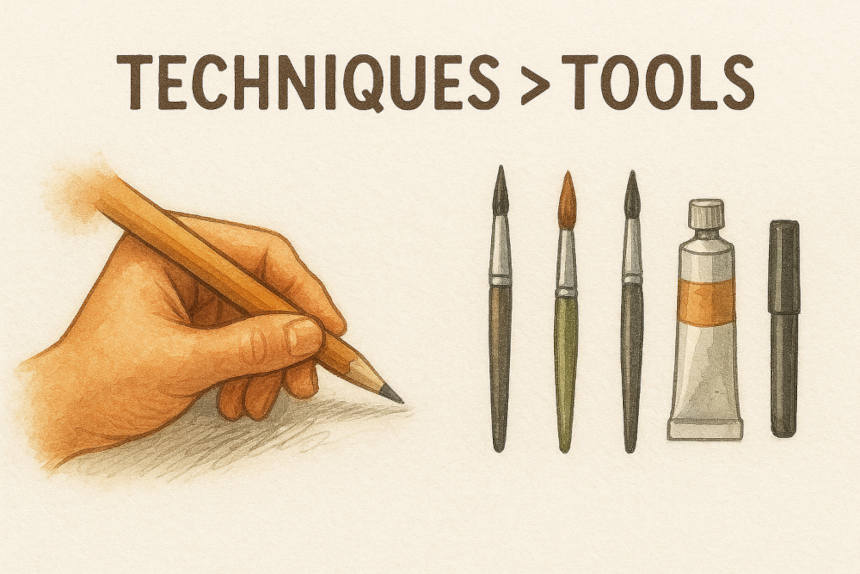
Unfortunately, in digital, most do not possess the mastery of the digital applications and specifically the tools in order to produce realistic digital artworks. Sure, there is an abundance of tools but without the intimate knowledge of developing real art techniques, it’s like hiring an engineer to drive a Formula 1 car and expect fantastic results. After all, he/she has intimate knowledge of the car and the mechanics.
As I indicated earlier, most people who use digital painting applications are used to the myriad of tools to make their art piece. You may think they have mastered the use of tools to create the art ‘techniques’ that I am referring to. Not so, because they are still highly dependent on the tools to produce any artwork. They will always be constrained by the tools and unfortunately a ‘slave’ to the tools themselves.
So the question now becomes, how else is someone able to make digital drawings and paintings?
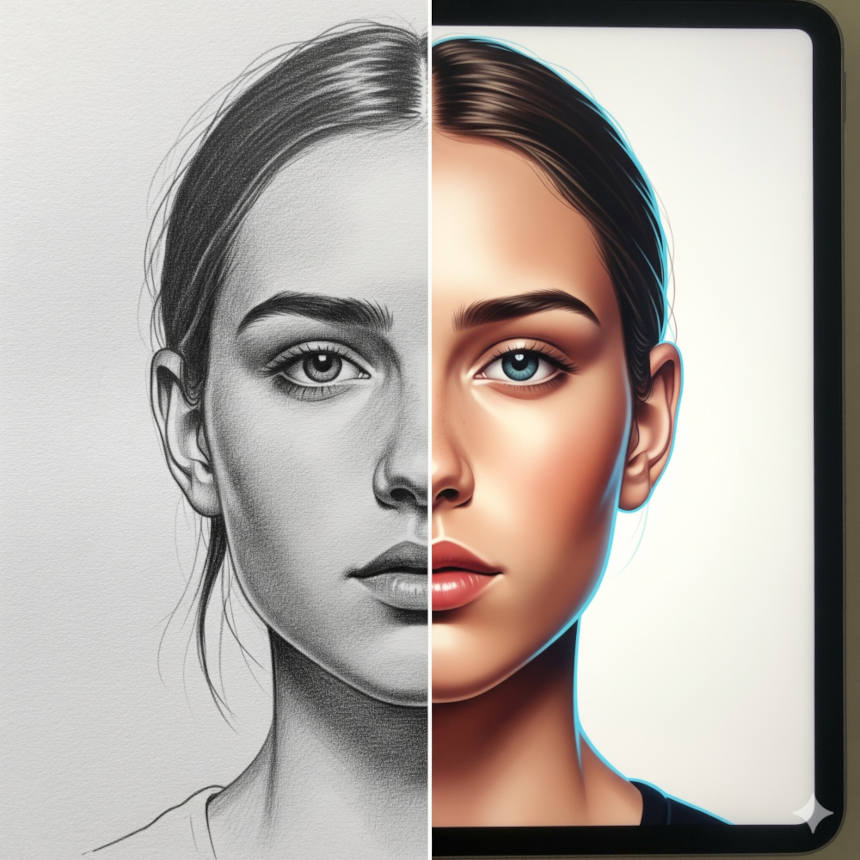
I will show you how this is possible and you will be scratching your head thinking why anyone didn't think of this before? I will get into the details of the methods and processes that I typically use for digital drawing and painting. However, it is important to learn how this all came about.
Remember, I told you that techniques are completely separate from the tools themselves and in traditional mediums this is even more so. Think for a moment that we have simple tools for traditional mediums but yet there is a proliferation of artworks including photorealism art. On the other hand in the digital medium we have a proliferation of tools but very little in the way of photorealism artworks.
I have put a simple equation for the traditional medium versus the art techniques.
- Minimal tools = Huge array of real art techniques (Traditional)
On the opposite side of this equation is the following that is typical of the digital medium.
- Many tools = Minimal set of real art techniques (Digital)
The ‘art techniques’ that I refer to are the innate skills developed by artists through practice, it’s not a tangible skill that you can put your finger on. For example, the artist's ability to see color in a way that allows them to develop the exact tones for a specific painting. The intimate drawing process of the artists which collectively forms the final piece of drawing or a painting. Their innate ability to control the pencil and do so much more than most people.
Equation 1 can be acknowledged by many traditional artists to be true, since there is no shortage of art techniques taught by artists and the artworks produced.
Equation 2 can be a bit more difficult to understand as I have put digital into this category and relegated art techniques to the minimum level. Many digital artists will take offence to this since they have put much effort into learning the application and developing so called ‘techniques’. I will explain that the art techniques that they speak of are not the real ‘art’ techniques that so many ‘purists’ artists are familiar with.
Let’s take the example of blending which is done by hand in traditional and the use of tools in the digital camp. You can see in the digital approach, the artist is confined to the tools since there is no other way of blending. In the traditional approach, it’s done by hand and mastery of this technique is only limited by the artist themselves and not the tool.
Suppose, you wanted to create a photo realistic drawing in digital. Someone who has tackled this kind of drawing will know that tones play a pivotal role to replicate something close to the photo or the real object. Tones or values are fundamental to acquiring the necessary drawing techniques and skills and its application to art including portraits, landscapes etc. Blending is a critical process to differentiate tones and bring about the realistic quality in a painting.
Take the example of the shadow of an apple, as an example, this tonal variation is not perfect, it may be imperfect due to other nearby objects casting shadows or emanating light. To capture all of these through tools is an exceptionally long process since you are confined to the tool and what it can do. You will attempt to break down the areas into segments and use the tool to create a more realistic effect. In the case of doing this by hand in digital, I would zoom in and use the correct shade of tone to apply in the areas needed. I could zoom into tiny details that matter and do this by hand. I have total control over the area where I want to shade based on the size of my brush as long as I am astute in my knowledge of tones. A good example of a digital drawing made in this way is shown below of a bag of crisps. It was made by the method described, only using one brush and the opacity setting of the brush. To me, it felt like the natural process of how I would draw with the traditional mediums.
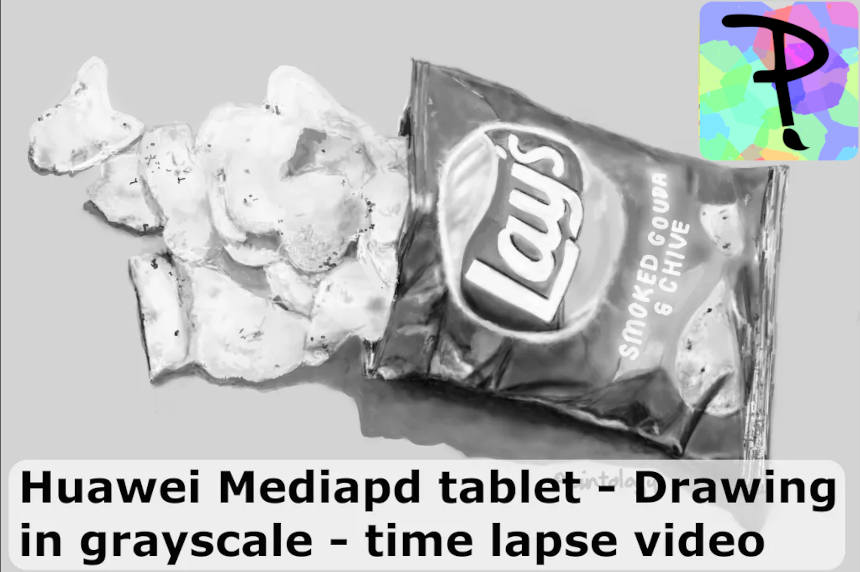
We can now say with confidence that Equation 2 is true for artists who confine themselves to using the tools only approach. Equation 3 where the methods I have mentioned regarding hand painted tones allows for greater flexibility and latitude of the drawing process.
- Simple tools = High set of real art techniques (Digital)
By introducing the human element of painting and drawing to the digital domain, we allow for a smaller range of tools but indirectly opening up a higher degree of real art techniques. The blending example provided above is one such case. But we can apply this to many other alternative approaches to tools vs hand. Take the example of auto corrections of lines where the application removes the jagged edges of the human hand drawn stroke and makes it smooth. Most real world objects are not perfect and their lines are typically random with varying tones. Confining to tools alone will always imply that the finished drawing piece will look too ‘perfect’ and computerized, digitized, anime like etc. One can often tell the difference between a digital art piece over one made by hand with traditional mediums.
I would argue that this is the most significant point and one of the main reasons why many traditional artists tend to look down on the digital medium. The ‘human element’ is missing from digital but is clearly obvious in the traditional artwork.
When many digital artists rely on the tools to make their artwork, they automatically confine themselves to the limitation of the tools. All areas of drawing that were typically done by hand in traditional fashion are objectified and rendered by tools. Each tool having a dependency on the next tool. The result is that you are making extensive use of the tools and doing very little actual hand drawing.
Equation 1 tells us that a minimal set of tools allows you to master many techniques as demonstrated with traditional tools as well as the carpenter analogy that I mentioned earlier. Despite the carpenter's lack of numerous tools, he/she has developed exceptional techniques (wood-working) to produce high quality furniture. Their mastery of tools allows them to develop fundamental techniques and become a master in their craft.
You might argue the point that in traditional photorealism the artists in some cases are making use of mixed media which can be considered to be a ‘many’ tools approach. Remember, unlike the digital medium each of the digital tools does not dictate to the artists on how it should be used. It is just a guidance and the artist is still left to their inherent skill on how and when to make good use of it. In the digital medium, the tools have narrow and specific ways on how to use them and the reliance on tools overshadow any real ‘art’ techniques that the artist can make use of. The digital techniques are not real art techniques as such but the ability to become proficient in the use of the tools. This requires technical prowess and the reason why many traditional artists shy away from the digital medium altogether.
You just have to look at many of the digital art courses where they briefly mention the importance of art fundamentals but dive straight into the application of tools.
4. Alternative to the mainstream digital drawing process
The manual techniques of digital painting that I spoke about earlier are the techniques that I use for all of my digital paintings and drawings. It essentially uses the brush and the opacity settings of the brush and a full appreciation of tones. It is this process that I have worked over time and am able to produce exceptional photo realistic drawings in the digital medium. I am also able to do this faster and more efficiently than most traditional artists.
You can see an example of my early photo realistic drawing where I put my skills to the test in creating an emerald drawing on a tablet using the Paintology app.
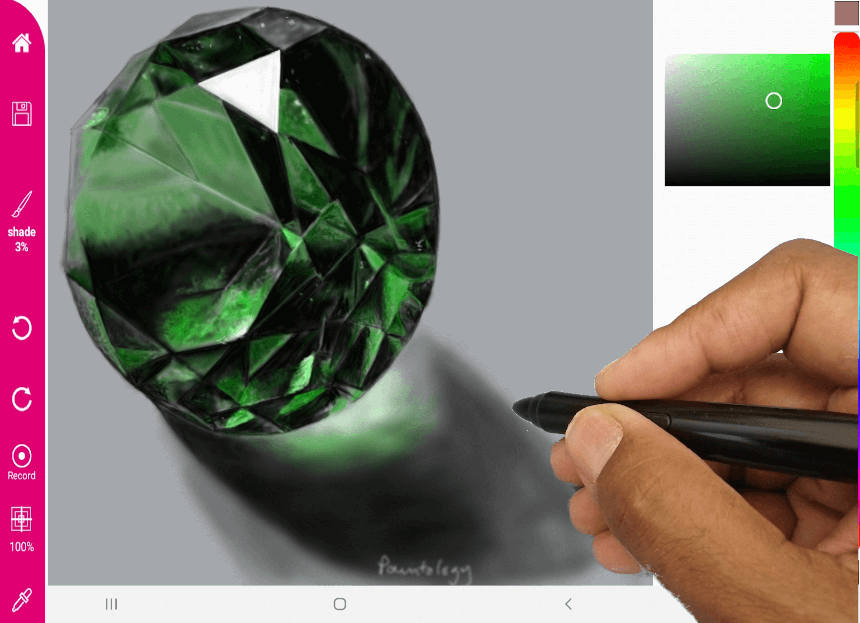
I use the approach of minimal tools to make my digital artworks and oddly enough many confuse my artworks made with traditional mediums. This is a direct result of the manual approach to drawing in the digital medium, using a minimum set of tools.
A result of the Equation 3 approach means that I spend more time in the actual drawing process and less on selecting tools like the mainstream approach (Equation 2).
Although people who are not versed in how a painting is made either in traditional or digital won’t fully appreciate the differences. There are many digital artists who will not fully understand this process until they go through an entire lesson with me. Hopefully, it will open their eyes, but there is a big hurdle and dilemma.
The seasoned digital artist will be unable to shift their mind into the less tools approach because they have already been grounded in the many tools approach. It will mean untangling all their learning experience with tools in order to go down this path. You have to understand that in no way or fashion am I putting these digital artists down for the skills they possess. They are a valuable part of the digital art community where their skills are needed in animation, computer graphics, games development and many other markets.
I am making the case for people who love to paint and draw in the traditional medium and want to transition to the digital medium. If you want to join the industry or markets where the digital applications and the tools are essential to the job in hand, then you need to become skilled in the use of the tools. Without this it would be difficult to break into this market.
For those that want to adopt the simplified few tools approach as I do in digital drawing and painting, please read on. If you are already into digital drawing and making good use of tools and want to learn this avenue of learning, you should consider the following.
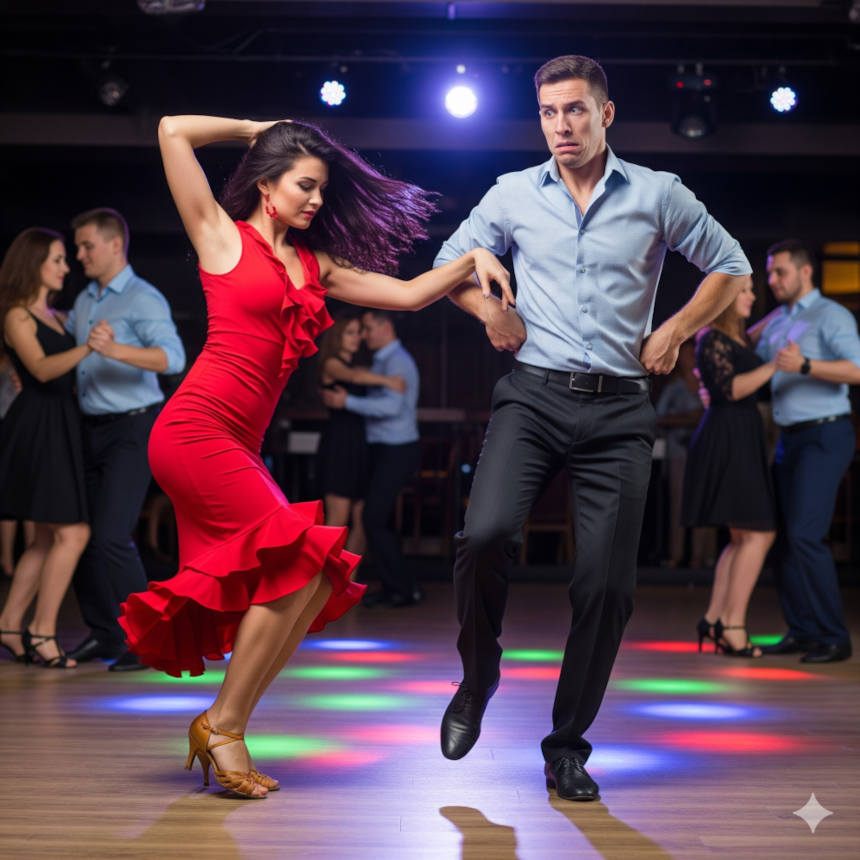
You will appreciate what I am saying with the following example of salsa dancing which is one of my other passions.
When you learn salsa, it's very possible that you will pick up some bad habits that are not fundamental to the art of salsa dancing. You continue with these moves and over time you will find it very hard to undo and correct these mistakes. If you can pass this move off on the dance floor without much resistance, you really don’t care. The same is true of making a digital drawing or painting in a particular way, if you have been using it in a particular way, you will find it difficult to change your ways. But you should know that going via that route can open up immense benefits as I explained earlier with real examples.
This can preclude above groups who are reliant on tools and dismiss the possibility of other ways of painting and drawing in digital. I mentioned earlier that understanding these techniques can be difficult for most since tools are a quicker and easier alternative.
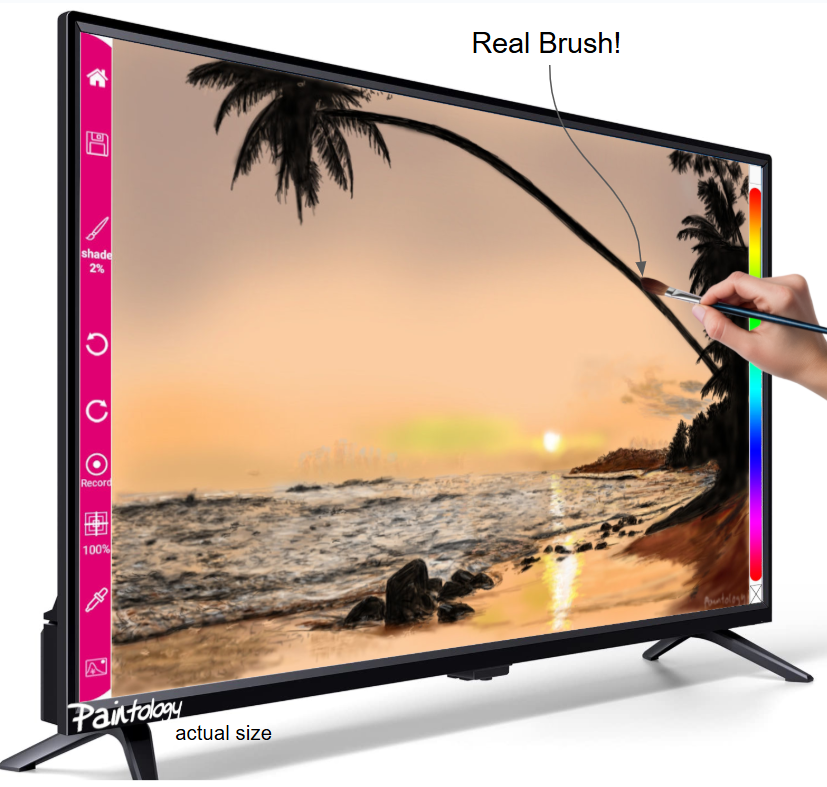
The audience that are most likely to adopt my method of minimum tools are the traditional artists themselves. It was the reason for the development of the larger digital canvas to allow the process of natural painting techniques for digital using a real bristle brush!
Beginner digital artists as explained before will be drawn to the digital tools as a fast way to get into drawing. If they want to learn, the temptation of moving away from tools as a method for drawing is too great unless they are able to see any real value. As mentioned previously, beginners don’t have any real grasp of what innate art techniques truly are, since they are not tangible like the tools. Their interest lies in the quickest route to making drawing using the many tools of the application which makes this possible.
In essence, the right audience would be the total beginner digital artist and also traditional artists who are open to learning digital painting in this way. I say this because many traditional artists have already put up a block through preconceived notions of what digital painting is about and sadly from the mainstream audience of the many tools approach.
If you like this article, please visit some of the social sites and support my case!
Ferdouse Khaleque PhD