There is more to Paintology - Landscape Painting
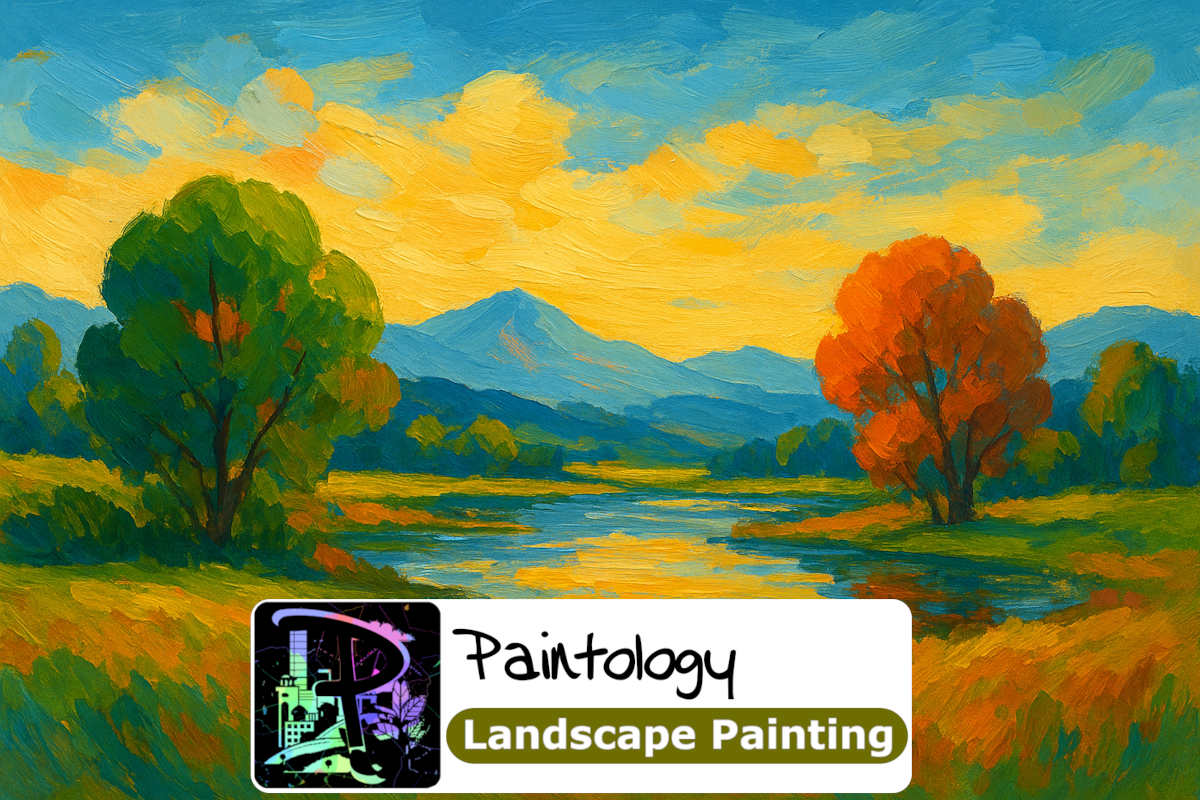
Apart from the joy of doing Paint by Numbers, it actually teaches you some foundational art skills and techniques.
Landscape painting is one of the most effective ways to accelerate overall artistic skill development because it forces the artist to contend with a unique set of challenges related to light, distance, and composition.
Here is a breakdown of how focusing on landscape painting profoundly helps with core artistic skills:
1. Mastering Atmospheric Perspective (Depth)
The biggest challenge in landscape painting is creating the illusion of deep space on a flat surface. This skill is called Atmospheric Perspective.
- Color and Value Shifts: Landscape painting trains you to understand how the atmosphere (haze, dust, moisture) affects color and value. You learn that objects further away become:
- Lighter in Value: Shadows become lighter.
- Less Saturated (Grayer): Colors become muted.
- Bluer/Cooler in Hue: Colors shift towards the sky color.
- Creating Illusion: By consciously shifting the color palette and value as you move from the foreground to the background, you master the creation of depth and distance—a skill that can be applied to creating depth in any complex scene, including architectural interiors or urban settings.
2. Tonal Simplification (Seeing the Big Picture)
A landscape often contains an overwhelming amount of detail (leaves, blades of grass, rocks). Landscape painting forces you to generalize and simplify.
- Massing: Instead of drawing every leaf, you learn to group areas into large masses of tone and color (e.g., "The tree canopy is one large dark-green mass," or "The field is one light-yellow mass"). This teaches you to distinguish between essential information and noise.
- Focus on Value Structures: By simplifying forms into large tonal masses, you master value structure, which is the skeleton of any successful painting. This disciplined simplification is key to creating paintings that are powerful and readable from a distance.
3. Understanding Color Temperature and Light
A landscape is defined by its light, and mastering light requires understanding color temperature.
- Warm vs. Cool: You learn that direct sunlight is warm (yellow/orange), while shadows often contain reflected light from the sky and are therefore cool (blue/violet).
- Observing Time: Painting landscapes at different times of day (or even imagining them) trains your eye to notice how the entire scene shifts from warm morning light to cool, long evening shadows. This mastery of color temperature allows you to make any subject—a still life, a portrait—feel like it is bathed in a convincing, specific type of light.
4. Compositional Control
Unlike a portrait (which is often focused on a central subject), a landscape requires you to actively compose a vast scene.
- Rule of Thirds and Leading Lines: You practice using established compositional rules (placing the horizon on a third, using roads or rivers as leading lines to guide the viewer's eye).
Designing the Scene: You learn to edit reality, deciding what to include, what to leave out, and where to place elements (like a prominent tree or rock) to create a harmonious and compelling image. This intentional manipulation of elements strengthens your overall design sense for all your art.
Download your free Paintology landscape app from the Google play store today!
https://play.google.com/store/apps/details?id=com.paintology.lite.landscape.painting