Steps to a Photorealistic Drawing
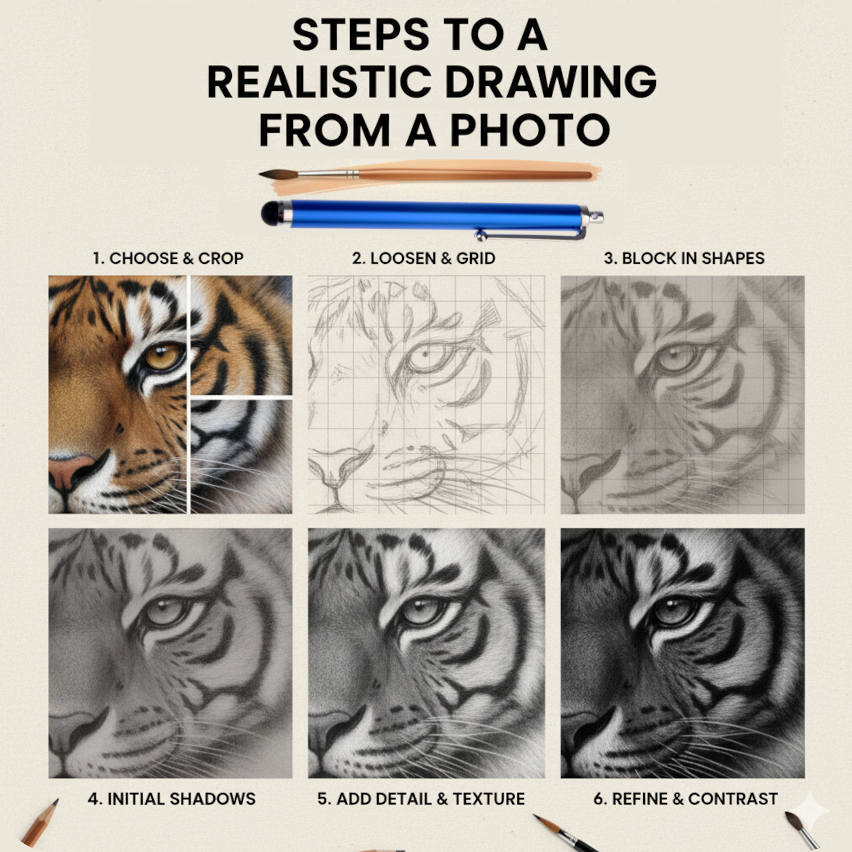
Steps to photorealistic drawing relies entirely on the artist's ability in the mastery of techniques over the tools. This includes drawing in both traditional or dgitial mediums. There are many examples of pencil drawings where the ability of the artists shows in their art pieces. Some can bring out the ‘realistic’ quality of the object or photo that they are trying to draw where others struggle to get it beyond a particular stage.
This my friend is all down to the art techniques that I talk about time and time again and applies to all mediums including digital. It’s a field that is not appreciated by beginners because they are just entering the realm of drawing and painting. They may mistakenly assume that drawing a line is a technique, shading is a technique but nothing beyond that. You cannot blame them because they have not mastered the range of techniques required for someone to make realistic drawings.
You may not know that digital provides an excellent platform for learning the art techniques but there is an important caveat. You need to sacrifice tools over the acquisition of real art techniques. Just like traditional art techniques, the simplicity of the tools permits the artist to develop inherent techniques as they continue to experiment with the tools. It is this experimentation by the artists that nudges them to a level beyond others.
Let me give you an example of a digital painting that I was doing a few years ago using the minimal tools approach. I was making use of one brush and the application of tonal colors and I came across the choppy waters of this painting. I remember this specifically because I was actually struggling to pull this off and make it as realistic as possible. You can see the painting below made on my Samsung s6 tablet using the Paintology drawing app.

FIG. 1 Original photo of the beach scene, courtesy of Google images.
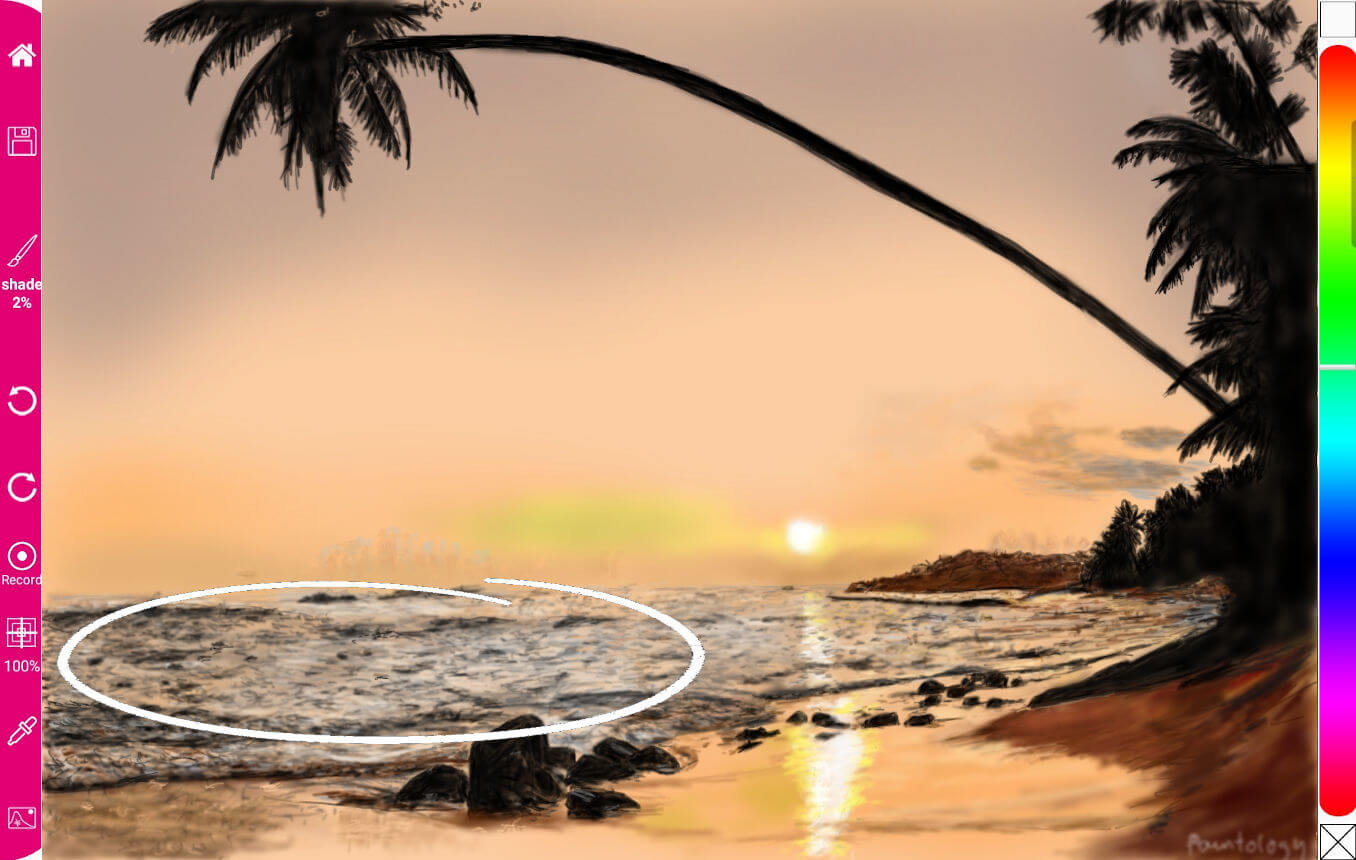
FIG. 2 Painting of the beach scene made by Ferdouse Khaleque on the Samsung s6 tablet using the Paintology app.
If you compare the two (photo and drawing), you can see that there is a fairly complex set of shapes and tones just for the region highlighted. FIG. 3 shows a close up of the differences between the photo and drawing and it's clearly obvious that high range of art techniques are required to pull this off.
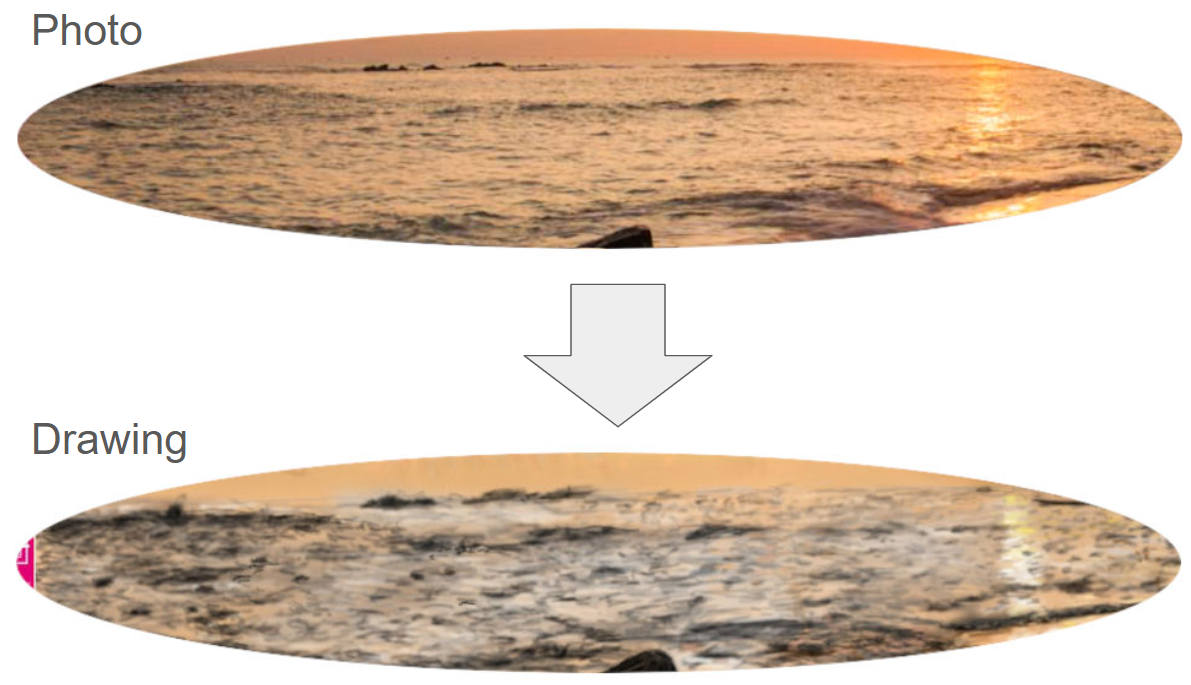
FIG. 3. Compare the small region of the sea waves that needs to be translated into the drawing.
As I was making this drawing, the complex structure of the shapes and tones were initially fairly difficult to do. Still, I persisted with the same brush, selecting small regions, zooming, adjusting the shading etc. As I got more comfortable with the results, I continued across the whole picture ensuring that I captured the right colors. You can see that I even captured the twinkle of the sun reflecting against the sea to the right. The drawing is not exact in the replication of the colors, if anything, the waters look more choppy than the tranquil quality of the original photo. Perhaps my mood was in a bit of a turbulent state while I was drying 🙂.
Here is a video of a photorealistic portrait drawing you can draw on your phone or tablet using the Paintology app.
For more information, please check out some of these blog posts below.
https://paintology.com/blog/art-techniques-in-photorealism
https://paintology.com/blog/photorealism-drawing-in-digital-the-easy-way
https://paintology.com/blog/the-process-of-drawing-learn-the-fundamentals